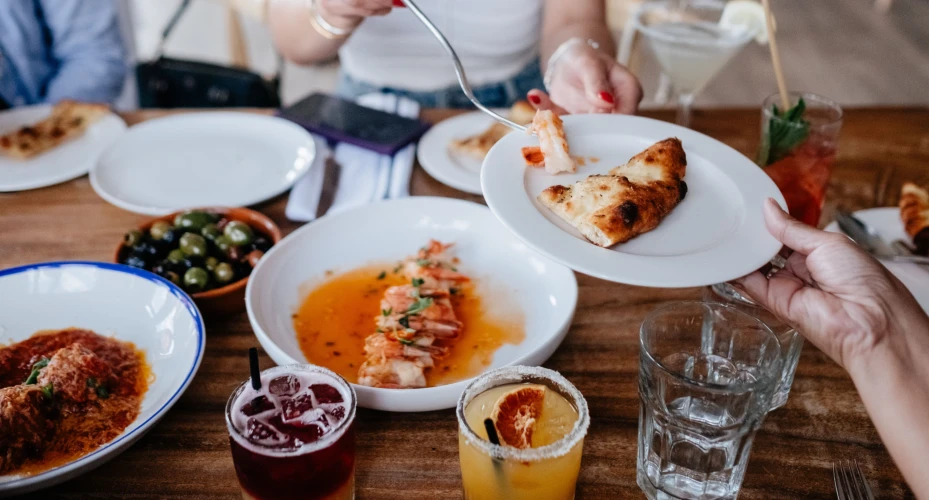
When we first started traveling, food was simply part of the experience. We wanted to try new restaurants, sample local specialties, grab a few snacks along the way, and enjoy ourselves. Whether something was particularly healthy did not really enter into the equation. Over time, that changed. We started paying more attention to our weight and wanted to maintain the progress we had made at home while traveling with our diet goals. This lead to a surprise fix for our problem with travel and diet.
First instinct; Eat healthier.
That seemed like the obvious answer, but it created a problem. The more we tried to make every meal a healthy choice, the less enjoyable some of those meals became. We would eat something that looked like the responsible choice, still feel unsatisfied, and then find ourselves compensating with snacks or treats later.
Eventually, we realized we were solving the wrong problem.
Instead of trying to make every meal healthy, we needed to understand how the food we were eating fit into the entire day.
We, to this day, have a tough time with the word “healthy” for the reasons we will discuss.
First, We Figured Out What We Actually Needed
The first step was figuring out our approximate daily calorie needs. That gave us a baseline and made it possible to start making decisions based on something more useful than whether a food had a reputation for being healthy.
From there, we stopped thinking about food as good or bad. We started looking at the basic breakdown of a meal: calories, protein, carbohydrates, and fat.
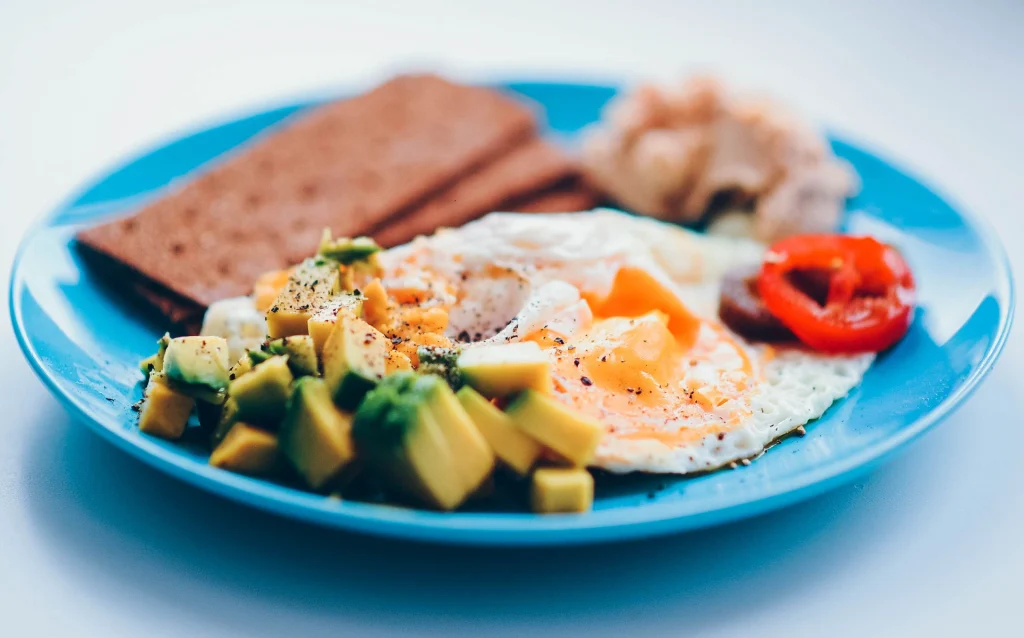
For a while, we tracked what we ate. The goal was not to track everything forever. We wanted to learn what a particular portion looked like and get better at estimating calories when we did not have exact information. Our experiment was simply to figure out how much we ate when we ate out.
That exercise led to one of the more surprising discoveries in our travel diet.
Healthy Can Mean More Calories, Temptation
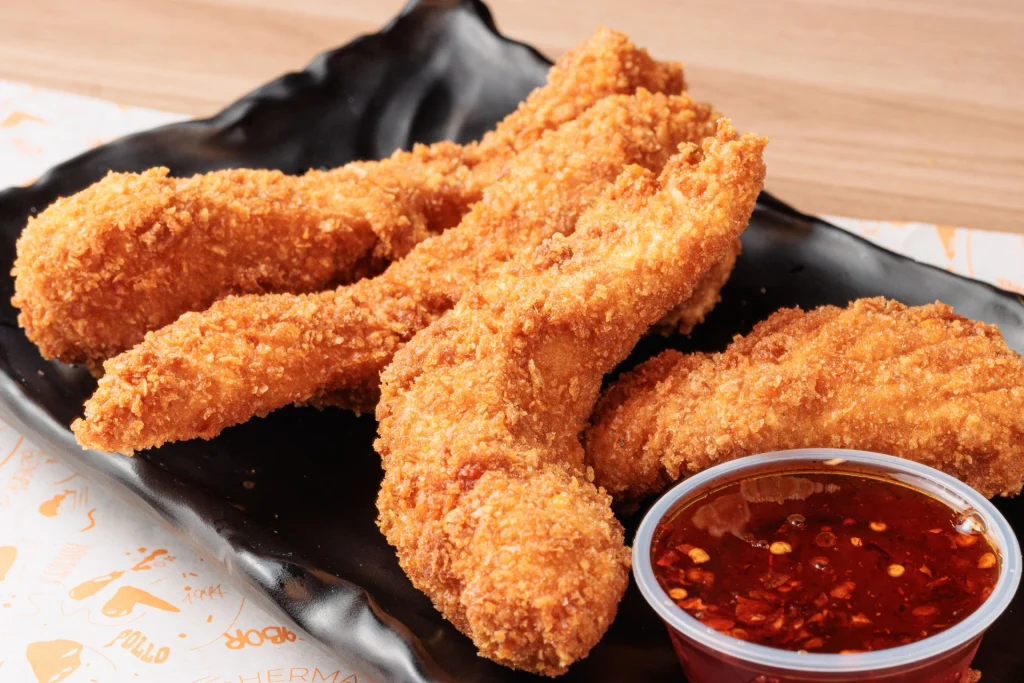
Fried chicken and potato wedges from a gas station could fit our goals much better than a Cobb salad at a restaurant.
Obviously, that does not mean fried chicken is healthier than a salad. The point was that the label “healthy” told us very little about how much we were actually eating. A Cobb salad can come with cheese, bacon, avocado, dressing, and a large portion. The fried chicken and potatoes might be a much more predictable amount of food.
Once we understood that, we stopped asking whether something was healthy and started asking whether it worked for the day we had planned.
That was a much more useful question.
The Trap We Had Fallen Into
Trying to eat healthy while traveling created another problem that took us a while to recognize.
We were often overeating because the meals themselves were not particularly satisfying.
A lighter meal might leave us thinking about food an hour later. After spending the meal making what felt like the responsible choice, it was also easy to justify a treat afterward. The result was sometimes a healthy meal followed by snacks that we would not have eaten if we had simply had a more satisfying meal in the first place. Yeah, that is the lizard brain at work which is a real problem for many of us.
It’s Not Exercise, It Is Fatigue Talking
Travel added another complication: we had to get better at distinguishing actual hunger from being tired.
After a long day of driving or flying, it is easy to interpret fatigue as hunger even though you may have sat all day. On a day when we had been hiking or walking around a city for hours, however, the extra hunger was real. We found, those situations could feel remarkably similar even though our bodies had very different caloric needs.
The other major problem was that we were not planning.
When we waited until we were hungry to figure out what we were going to eat, the available options made the decision for us. Maybe there was a fast-food restaurant nearby. Maybe the only convenient option was a large restaurant meal. Either way, we were making a food decision at exactly the point when we had the least patience for making a good one.
We needed to plan before we were hungry.
The Fix Was Planning, Not Restriction
Before a trip, we started looking at what each day would involve. A day spent hiking called for something different than eight hours in a car. A day spent walking around a city called for something different than an afternoon sitting by the pool.
That gave us a rough idea of how much food we were likely to want, but it also helped us decide where we wanted to spend those calories.
We started planning meals before we left, while we still had the luxury of being thoughtful about our choices.
Just as importantly, we put everything on the menu.
Chips were on the menu. Jerky was on the menu. Granola bars were on the menu. Grocery store fried chicken was on the menu. So were beer, wine, and ice cream.
Consistent Calories, Not Health Food
The difference was that we knew roughly what those foods represented in terms of calories.
That made some foods that we might normally consider less healthy” incredibly useful for travel. Chips and jerky are easy to carry, do not require a restaurant, and can be portioned into a known number of calories. Having those foods available meant we could keep moving without reaching the point where we were desperately hungry and willing to eat whatever was in front of us.
The indulgent foods also served a purpose. A bag of chips or some jerky might not be the most nutritionally impressive meal, but it could give us a predictable amount of food while leaving room for something we really wanted later.
We Stopped Trying To Be ‘Good’ Every Day
Another change was realizing that every day of a trip did not need to have the same food strategy.
Some days could include a great dinner, drinks, or dessert. On other days, we could keep things simple with our snacks, a straightforward breakfast, and an easier dinner.
That approach worked better than trying to be disciplined at every meal. A day of simpler food gave us room for an indulgent meal later. Conversely, after a big restaurant dinner, there was no reason to make the next morning another food event.
This also meant we could enjoy treats without feeling like we had blown our calorie goals.
If we had kept our food fairly simple during the day, there might be room for ice cream in the afternoon. Knowing that the ice cream was part of the plan made it easier to enjoy it without turning the entire day into an unplanned eating spree.
Hotel Breakfast Became Our Easy Win
Hotel breakfast was another tool we started using more deliberately.
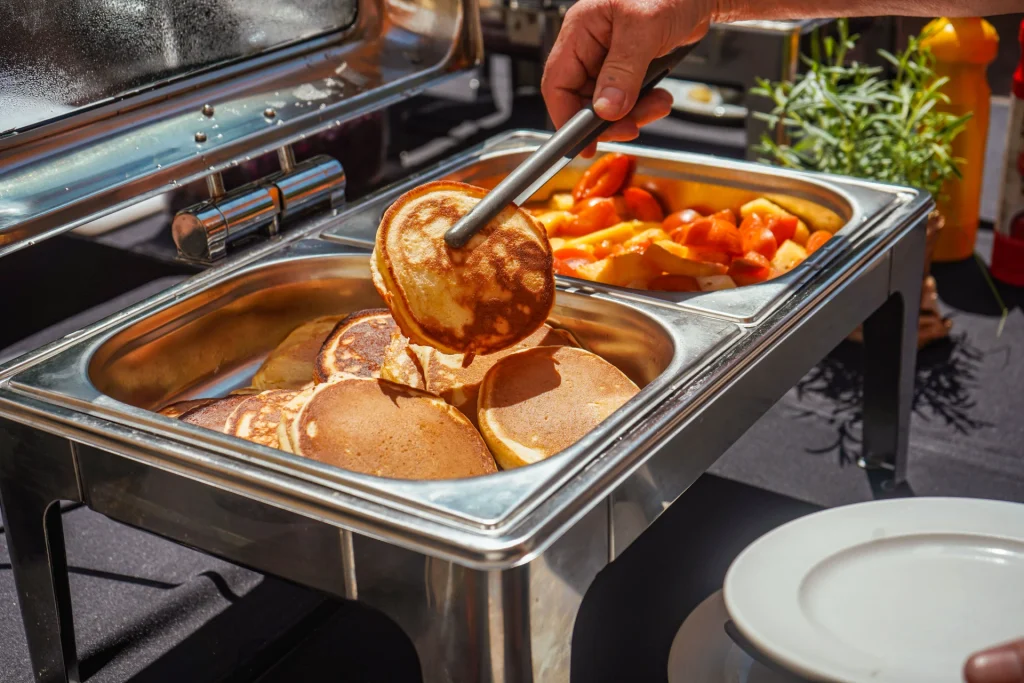
It was not necessarily the most exciting meal of the trip, but that was exactly what made it useful. WE could chose our portions and options from what was there. Over time, we found these breakfasts were pretty routine across hotel chains. We generally knew what would be available, and we could put together a predictable breakfast without spending much time or money figuring out where to eat.
That gave us a known calorie supply to start the day and left more flexibility for lunch and dinner. Sometimes, we could use them to grab some fruit to take for the day ahead as well.
Not every meal needed to be memorable. We were traveling to experience the destination, not to make every breakfast an event.
We Planned Dinner Before We Were Hungry
Dinner planning made an even bigger difference.
Rather than waiting until we were hungry and then looking for somewhere to eat, we would research restaurants the night before. Reviews helped us narrow down the options, while photos gave us a surprisingly useful idea of portion sizes.
Restaurant descriptions can only tell you so much. Seeing the actual plate gave us a better sense of whether we were looking at a modest meal or enough food for two or three people.
By the time dinner arrived, we already had an idea of where we wanted to go and what we might order.
That removed a lot of the decision-making that happens when you are hungry, tired, and standing in an unfamiliar part of town.
We Planned Our Drinks Too
Drinks were another place where calories could sneak up on us.
Buying beer or wine from a grocery store gave us a much better idea of what we were consuming than ordering whatever happened to sound good at a restaurant or bar. It also helped us avoid turning a couple of drinks into a surprisingly large calorie expense.
There was another benefit: it usually cost less.
The goal was never to eliminate drinks. We simply wanted them to be a deliberate part of the trip rather than something we added without thinking.
The Unexpected Result
The irony was that eating a little less “healthy” helped us manage our weight better while traveling.
First, it cut costs because we were not relying on restaurants for every meal. Second, it controlled calories because we knew what we were eating before we got hungry. Most importantly, we still ate food that felt fun and different from what we normally ate at home.
Nothing about the approach required us to go hungry.
We also did not feel cheated. These were not our everyday meals, and we were not trying to recreate our normal routine while traveling. We were making room for the things we wanted to experience.
That could mean fried chicken one day, a great restaurant dinner the next, or ice cream in the middle of the afternoon.
The important part was that those choices fit into the overall plan.
What We Actually Fixed
Looking back, our original mistake was thinking that eating well meant making the healthiest possible choice every time we were hungry.
Travel taught us that a better approach was to think about the entire day.
We learned how much food we actually needed and got better at recognizing the difference between being hungry and simply being tired from a long drive or flight.
Planning ahead made a bigger difference than we expected. We could decide where to spend our calories before we were hungry, keep convenient foods with us, and look at restaurant portions before choosing where to eat.
Even our drinks and treats became part of the plan. Rather than feeling like we were breaking the rules, we knew when we had room for something we wanted.

Evolution Not Revolution
None of that sounds particularly revolutionary.
The surprising part was what happened when we put it all together.
Our calorie intake stayed relatively stable. Our weight stayed where we wanted it. We spent less money. And we got to eat plenty of food that was more interesting than the meals we would normally make at home.
In the end, we did not need a perfect travel diet.
We needed a travel diet that accounted for the fact that we were traveling.
Once we stopped trying to eat “perfectly” and started planning how we wanted to spend our calories, we found that we could enjoy the food, enjoy the trip, and still come home in roughly the same place we left.
 Amy
Amy